18 Results for "

Anoectochilus formosanus Hayata

" in MedChemExpress (MCE) Product Catalog:
Products (18)

18 Results for "Anoectochilus formosanus Hayata" in MCE Product Catalog:

13
13 Cited Publications
Cat. No.: HY-N6972
CAS No.: 481-49-2
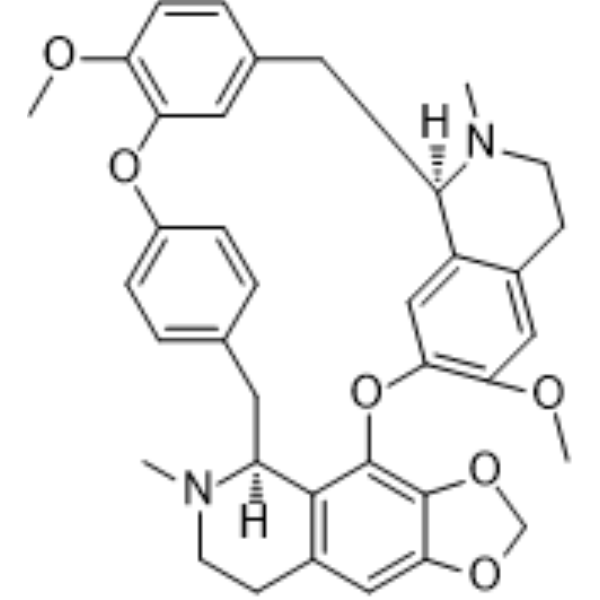
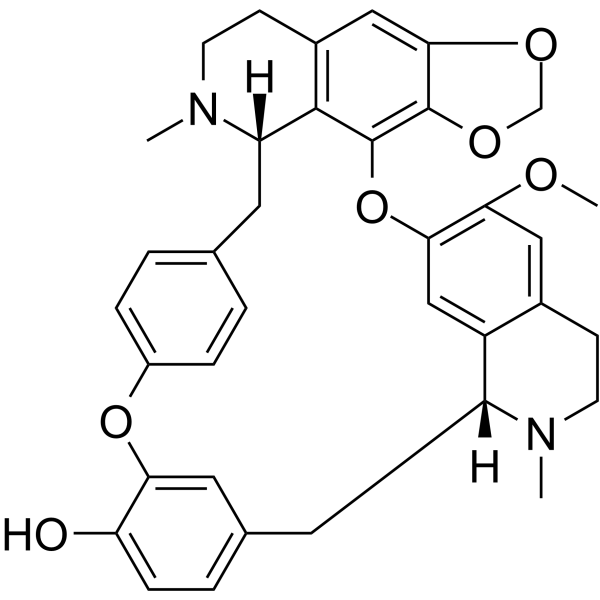
Cepharanthine is a natural product that can be isolated from the plant Stephania cephalantha Hayata. Cepharanthine has anti-severe acute respiratory syndrome coronavirus 2 (anti-SARS-CoV-2) activities. Cepharanthine has good effective in suppressing viral proliferation (half maximal (50%) inhibitory concentration (IC50) and 90% inhibitory concentration (IC90) values of 1.90 and 4.46 μM . Cepharanthine can also effectively reverses P-gp-mediated multidrug resistance in K562 cells and increase enhances the sensitivity of anticancer agents in xenograft mice model . Cepharanthine shows inhibitory effects of human liver cytochrome P450 enzymes CYP3A4, CYP2E1 and CYP2C9. Cepharanthine has antitumor, anti-inflammatory and antinociceptive effects .
Cat. No.: HY-119902
CAS No.: 201593-84-2
Purity:  99.38%
Target:  

Insecticide

Research Areas:  

Infection

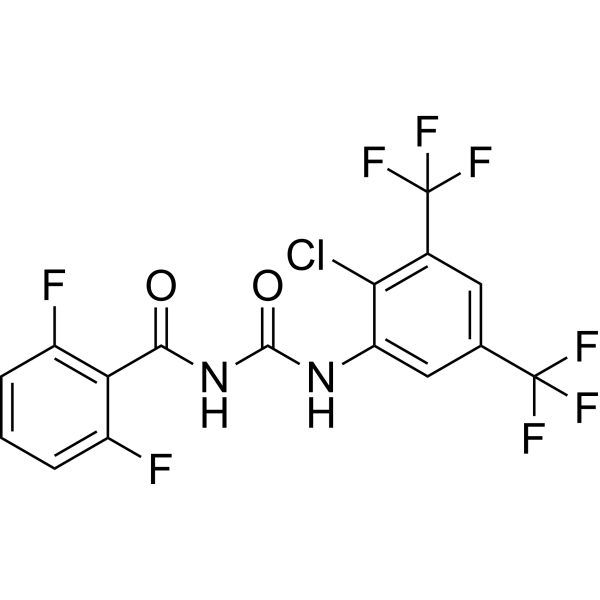
Bistrifluron is a benzoylphenylurea compound and orally active insecticide with activity against termites. At a concentration of 5,000 ppm, Bistrifluron acts as a bait toxicant against workers of the Formosan subterranean termite (Coptotermes formosanus), and also inhibits the grooming behavior of termites and impairs their motor ability prematurely .
Cat. No.: HY-W067056
CAS No.: 1754-62-7
Synonyms: Methyl (E)-3-phenylpropenoate
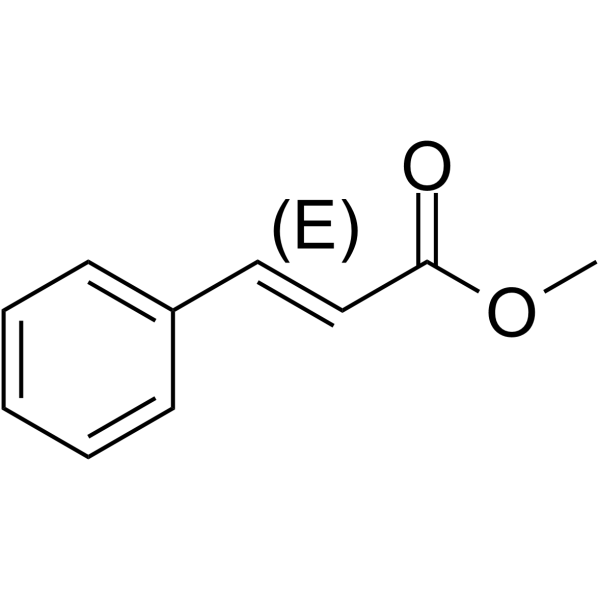
Methyl (E)-cinnamate (Methyl (E)-3-phenylpropenoate) is a natural flavor compound with anti-inflammatory properties found in Alpinia katsumadai Hayata. Methyl (E)-cinnamate induces apoptosis via reduced anti-apoptotic protein expression, increased TUNEL-positive cells, and apoptotic morphological changes. Methyl (E)-cinnamate can be used for the research of abnormalities of osteoblast function in bone diseases .
Cat. No.: HY-N7293
CAS No.: 18456-03-6
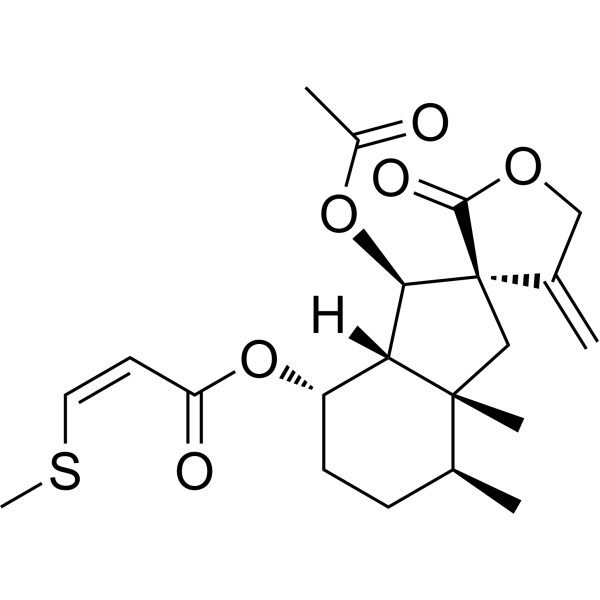
Bakkenolide D is a sesquiterpene lactone. Bakkenolide D is the major component of Bakkenolides in Petasites tricholobus. Bakkenolide D exhibits anti-allergic and antihistamine activities, and can be used in studies related to allergic rhinitis .
Cat. No.: HY-N8239
CAS No.: 27686-34-6
Cepharanoline is a compound isolated from Stephania cepharantha Hayata. Cepharanoline has proliferative activities .
Cat. No.: HY-W067056S1
CAS No.: 2022152-96-9
Synonyms: Methyl(E)-3-phenylpropenoate-d7
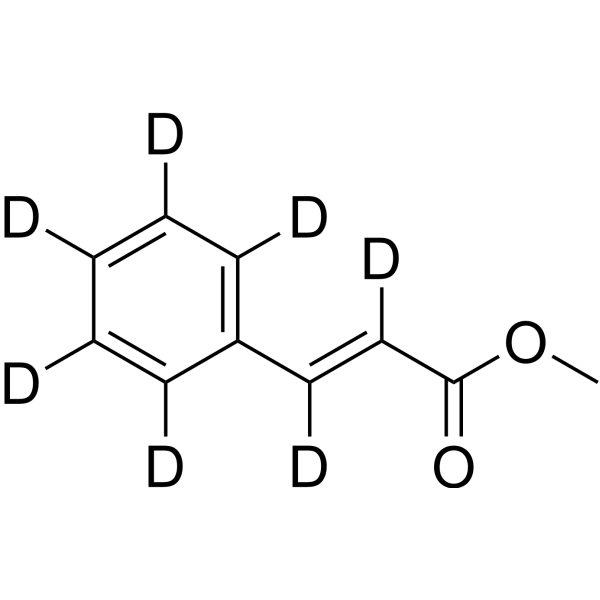
Methyl(E)-cinnamate-d7 is the deuterium labeled Methyl (E)-cinnamate. Methyl (E)-cinnamate (Methyl (E)-3-phenylpropenoate) is a natural flavor compound with anti-inflammatory properties found in Alpinia katsumadai Hayata. Methyl (E)-cinnamate induces apoptosis via reduced anti-apoptotic protein expression, increased TUNEL-positive cells, and apoptotic morphological changes. Methyl (E)-cinnamate can be used for the research of abnormalities of osteoblast function in bone diseases .
Cat. No.: HY-N6972R
CAS No.: 481-49-2
Cepharanthine (Standard) is the analytical standard of Cepharanthine. This product is intended for research and analytical applications. Cepharanthine is a natural product that can be isolated from the plant Stephania?cephalantha?Hayata. Cepharanthine has anti-severe acute respiratory syndrome coronavirus 2 (anti-SARS-CoV-2) activities. Cepharanthine has good effective in suppressing viral proliferation (half maximal (50%) inhibitory concentration (IC50) and 90% inhibitory concentration (IC90) values of 1.90 and 4.46?μM . Cepharanthine can also effectively reverses P-gp-mediated multidrug resistance in K562 cells and increase enhances the sensitivity of anticancer agents in xenograft mice model . Cepharanthine shows inhibitory effects of human liver cytochrome P450 enzymes CYP3A4, CYP2E1 and CYP2C9. Cepharanthine has antitumor, anti-inflammatory and antinociceptive effects .
Cat. No.: HY-N9186
CAS No.: 226711-23-5
Bakkenolide Db is a compound that can be isolated from the root of Petasites formosanus. Bakkenolide Db may have cytotoxicity .
Cat. No.: HY-N15690
CAS No.: 220235-66-5
3-(R)-3-β-Glucopyranosyloxy-4-hydroxybutanoic acid is a butanoic acid glucose. 3-(R)-3-β-Glucopyranosyloxy-4-hydroxybutanoic acid can be isolated from the methanol extract of dried whole plants of Anoectochilus formosanus Hay. 3-(R)-3-β-Glucopyranosyloxy-4-hydroxybutanoic acid can be formed in 3 types of regenerated plantlets in vitro .
Cat. No.: HY-N9221
CAS No.: 24909-95-3
Bakkenolide III is a Sesquiterpenoids product that can be isolated from the roots of Petasites formosanus. .
Cat. No.: HY-N9214
CAS No.: 18456-02-5
1-Oxobakkenolide S is a Sesquiterpenoids product that can be isolated from the roots of Petasites formosanus .
Cat. No.: HY-N3575
CAS No.: 1000995-48-1
Synonyms: Chloramultilide C
Henriol A (Chloramultilide C) is a Lignans product that can be isolated from the heartwoods of Juniperus formosana Hayata. .
Cat. No.: HY-119902R
CAS No.: 201593-84-2
Research Areas:  

Infection

Bistrifluron (Standard) is the analytical standard of Bistrifluron. This product is intended for research and analytical applications. Bistrifluron is a benzoylphenylurea compound and orally active insecticide with activity against termites. At a concentration of 5,000 ppm, Bistrifluron acts as a bait toxicant against workers of the Formosan subterranean termite (Coptotermes formosanus), and also inhibits the grooming behavior of termites and impairs their motor ability prematurely .
Cat. No.: HY-N8044
CAS No.: 935276-32-7
Ebracteolatain A is a phloroglucinol derivative found in the roots of Euphorbia ebracteolata Hayata .
Cat. No.: HY-N3900
CAS No.: 101312-79-2
Tsugacetal is a Lignans product that can be isolated from the heartwoods of Juniperus formosana Hayata. .
Cat. No.: HY-W067056R
CAS No.: 1754-62-7
Synonyms: Methyl (E)-3-phenylpropenoate (Standard)
Methyl (E)-cinnamate (Standard) is the analytical standard of Methyl (E)-cinnamate. This product is intended for research and analytical applications. Methyl (E)-cinnamate (Methyl (E)-3-phenylpropenoate) is a natural flavor compound with anti-inflammatory properties found in Alpinia katsumadai Hayata. Methyl (E)-cinnamate induces apoptosis via reduced anti-apoptotic protein expression, increased TUNEL-positive cells, and apoptotic morphological changes. Methyl (E)-cinnamate can be used for the research of abnormalities of osteoblast function in bone diseases .
Cat. No.: HY-W067056S
CAS No.: 61764-82-7
Synonyms: Methyl(E)-3-phenylpropenoate-d5
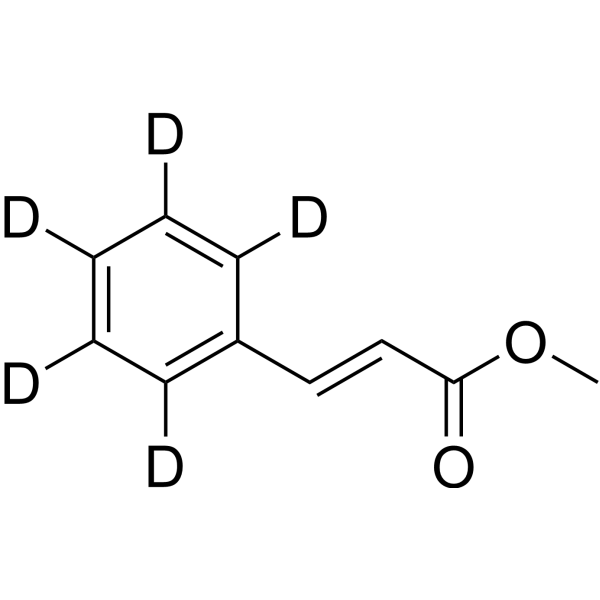
Methyl (E)-cinnamate-d5 is the deuterium labeled Methyl (E)-cinnamate . Methyl (E)-cinnamate (Methyl (E)-3-phenylpropenoate) is a natural flavor compound with anti-inflammatory properties found in Alpinia katsumadai Hayata. Methyl (E)-cinnamate induces apoptosis via reduced anti-apoptotic protein expression, increased TUNEL-positive cells, and apoptotic morphological changes. Methyl (E)-cinnamate can be used for the research of abnormalities of osteoblast function in bone diseases .
Cat. No.: HY-N17557
CAS No.: 343326-65-8
Synonyms: Schizarin D
Schizanrin D (Schizarin D) is a C18 Dibenzocyclooctadiene lignin. Schizanrin D can be derived from dried stems of Kadsura matsudai. Schizanrin D inhibits HBeAg production. Schizanrin D is inactive in vitro against HIV replication .
  • 1

